Tuesday, September 18, 2012

Design Loops and American Idol


Teaching students to be creative is often seen as a difficult thing.  We feel the need as teachers to direct this process as a way of better controlling outcomes so that they are more easily measurable.  We create specific rubrics that tell students how many points will be lost for certain infractions, we create arbitrary rules to guide the types of products that we will be comfortable putting a number grade on.  Not surprisingly, this approach rarely leads to inspired work; rather, it only creates compliance.
I fell into creativity as a result of my perceived isolation as a child.  I was looking for a way to express myself in ways that could communicate my feelings in ways that I seemed unable.  Poetry was something that I learned outside of “school”, and that I did almost exclusively in my “free time”.  It would be anathema to bring what I was doing into a classroom, because it wouldn’t be mine any longer.
After college, I enrolled (read; Lucked Into) an MFA program in Poetry.  The writing workshop was the first time that my art was being judged in authentic ways, by like-minded individuals.  The worth of what I was doing became paramount, and the criticism I received (believe me there was plenty of it) was easy for me to accept, I knew I had work to do.
Courtesy 19 Entertainment, FreeMantleMedia
When I watch television now, and I see the rash of reality shows that deal with talent competitions, I’m often struck by how they represent the opposite of the true creative process.  Shows like American Idol and Project Runway create challenges for the competitors, whether it’s designing Women’s Outerwear using only Twizzlers, or picking the right song to perform on Barry Manilow Week.  The constraints that are placed on the competitors are often arbitrary and strange, and the critiques that are given are usually equally disturbing.  There is a certain amount of anger in the judges, they seem to feel a strong need to put everything into two distinct categories.  The performance or piece is either the best thing they have ever seen/heard, or a complete disaster that requires the shaming of the player.  Putting forth an effort that the judges deem to be poor, almost always results in them becoming seemingly offended at the contestant.
Notice here that I don’t say Artist.  They are players or competitors only.  The irony is that they are competing for a title that is supposed to verify that they are in fact, true artists.  Let us for a few seconds look at the track records of some of these so-called winners.  American Idol, considered the premiere singing competition in the world, has been miserable in its supposed aim, finding talented individuals that will become stars.  In 11 seasons, the show has produced only 3 contestants that have arguable staying power.  Likewise, Project Runway has yet to find mainstream sustainable success for any of its winners.  I would argue that this is because the assessment techniques, and the work products created are not as much a function of an aspiring artist, but simply a compliant show character.
My biggest concern as an educator, and as an artist, is the effect that these shows are having on the perceptions of creativity in our students.  More than anything else, these shows espouse the idea that you can bypass the very important phase of the creative process that requires hard work, refinement, and adequate time for self-reflection needed to become a functioning artist.
Our district is in the process of rolling out a series of “loops” to replace and improve the standard ways of planning that most students have been exposed to over their education.  The loops allow students to enter the process at any point, and to begin to see that the creative process (as all loops lead to creating something, whether tangible or not) is rarely a linear event.

            The loops that we use are currently in development, and are hosted on the high school’s Media Center website.  You can explore the work that Deb Gottsleben and Anne Piascik have done HERE.  In addition to the research loop, John Madden, Instructional Leader at MHS, has developed a series of other loops for other processes, such as an Identity Loop and a Critical Thinking Loop among others.
            The goal here is to begin looking at the reality of being creative, that it is a way of thinking and problem solving, not just arbitrarily jumping through teacher-provided hoops. It requires authenticity, a desire to improve for the sake of improvement, and feedback that is not simply punitive and mean.
            Only when we begin looking at authentic modes of inquiry can we begin to create the problem-solving, creative artists we will need, to begin changing the perception and efficacy of publicly-educated students in this country.

As always, a few questions:

1.     How can we create better environments for “authentic” experiences for students?
2.     What can be done to counteract the onslaught of inputs that tell our kids that taking the risk to be creative is a punishable offense?
3.     How can we more effectively spread the idea of looping in our educational system?

Tuesday, September 11, 2012

Compliance and Ownership


Image by Humphrey Bolton


Last September, I decided that my class was going to embark on a full-fledged, studio approach to the year.  Students would self-select topics and papers that they would develop over the course of the year, and my role would be to mediate and conference with the students over the course of the year, effectively providing an individualized experience for every child.
            I knew that for many of the students, this would be a sea-change.  There were exiting a class that was far more rigid in it’s methodologies, one that prided whole-class direct instruction and specified intense rubric-based papers for all kids.  I spent the first few weeks laying the groundwork for the class, explaining the importance of being self-motivated, an interested person in our world.  We did a few preliminary papers to illustrate the process, and then began to open everything up.
            My struggling writers took to it immediately.  They found themselves writing more, finding ways to get deeper into their topics, and were proud to share the work that they were creating.  I was proud of myself. I was seeing a change in my struggling students.
            About a month into the second semester, I was walking with one of my students down the hall.  John (we’ll call him) was an average to high-functioning student, who had been rewarded highly for his compliance throughout his school life. 
He turned to me and asked, “Mr. D, this is fun and all, but when are we gonna learn something?”
“What do you mean?” I asked, now very interested in the response.
“Well, last year, we used to have vocab tests and reading quizzes, and we would learn little tricks?”
“Tricks?”
“Yeah, she would show us how to use a thesaurus to…”
“Okay, hold on,” I interrupted. “What have we done this year?”
The conversation went on, and I tried to explain to him how much individual attention he had received to that point in the year.  He conceded that he knew that his writing had improved, and that he had read more on his own that year than he had in the entire year previous.  Despite all of this however, he still couldn’t shake the idea that something was off.
The conversation floored me for a few reasons.  First, I realized that I may have not adequately explained myself to the kids in terms of why we were doing what we were doing.  Secondly, I was shocked that John had been so CONDITIONED to what he considered “school”.
Regardless of what they are exposed to, CHILDREN ARE LEARNING.  We would do well to understand that, and it’s implications.  If we provide students with experiences that are simply a measure of their ability to recall, or to get things done for the sake of doing them, we will create a class of student’s that excel at simply doing what they are told.
John was being given a chance to truly take control of his own learning, and without more help to understand why that was a good thing, he was reverting to the only thing he felt comfortable with: Compliance.
We must teach our students that they need to become comfortable being uncomfortable.  They need to live within the mindset that there are few absolutes, and that being there is ok.  When we narrowly define progress through a curriculum, we narrow our students’ ability to roll with the punches, we destroy their natural ability to be adaptive.
This year, I am spending much more time extolling the rationale for why we are taking a turn away from traditional methods.  My students need to know not only why they deserve to have ownership of their education, but why they should demand it.
A few questions to close as always:
1.                     How can we increase individualized experiences for students in the face of public scrutiny over narrow measures?
2.                     What positive effect will tying student achievement on standardized tests have on best practices in classrooms?
3.                     How can we approach the institutional changes necessary to allow more progressive methodologies across our classrooms?

Monday, September 10, 2012

Day 2: Cultivating Interests


The second day of class will continue the work of the first, getting to know my new students and find out what things matter to them.  I have 80 minutes to work with.  We will start out by heading to the Library, and setting up camp in a corner with comfortable chairs and access to all of the books in the school.

I’ll ask the kids to take the time to really explore the place, to find a comfortable spot, and to start pulling some titles.  They’ll be able to begin reading the text to see if it may interest them.  If they are already in a book, they will be generating a “Reading Futures” list in their journals.  While this is going on, I’ll be pulling students aside to talk to them about their lives.  We’ll discuss their life in school, their life at home, their life with friends, their goals and dreams for the future. 
I’m excited to give them this time.  I’m excited to watch them go through the stacks, and have longer than 5 minutes to figure out which book they will read.  I’m looking forward to finding books for them if they need help, to facilitate a spark or interest that they never may have known existed.
When their ePortfolios are up and running, they will digitize the document that they create today, a reference point that they can constantly change as their interests change.  The Interest Inventory is the first step in class towards empowering my students to take an active part in their path through the year, and their lives.

Are we providing enough opportunity to listen and observe our students?

Are we occasioning space for these interactions to occur, between students and book, between teachers and students?

Are we gifting ALL of our students, not just the “high flyers”, with the chance to own their educations, to become active participants in their own development?

Wednesday, September 5, 2012

Day One: Ideas for the Opening of School


Tomorrow the kids arrive and a new year begins.  I’ve been given an amazing opportunity, and it has me excited, engaged, and to be honest, nervous. 

I’m piloting a model classroom this year.  Many of the posts on this blog will feature the ideas and lessons that I plan on implementing, but also whether or not they are successful.  The goal is to create a living document that I can use for reflection and development.

The class will be an 8th Grade Language Arts “A-Level” class, which is code in our district for “Standard” or “College Pre” level.  The students that have been selected all are on the bubble, students that have consistently scored between 10 points above or below proficient on the New Jersey Assessment of Skills and Knowledge (NJASK).  Many of these kids have had difficulty forging connections between their school lives, and their lives outside of education.

The goal for the year is to strengthen those connections, to allow them to see that their lives include both their academic pursuits as well as the pursuit of their interests, or to get Foundational, their happiness.

The class will provide experiential lessons and activities that will provide metaphorical and literal translations into their academic lives.  The class will have an open door policy, allowing teachers and administrators, parents and community members, to drop in and participate in the work we are doing.  Fostering this sense of community is one of the hallmarks of the class.

Before any of this can take place however, there has to be a groundwork of trust that is created, which leads me to my activity for the first day.  I’ll be taking the students outside (weather permitting) as a physical removal from the school environment, and starting with learning their names and getting everyone familiar with one another.  I will then introduce the class rules, and hold a discussion about each, inviting students to share their previous experiences at our school.

Here are the 4 Class “Rules”:

Your Words Matter

Too often, students arrive in the 8th Grade believing that their academic future is “fixed”.  That there is no possible way to transcend the difficulties that they have had in the past, whether they are academic, behavioral, or social.  It’s important on the first day that I let them know that they will be judged only by what they say and do from this point forward, and that when we communicate, their words must be clear and precise.  Their words will define their character, they are not something cheap top be thrown about, devoid of meaning.

You have a Voice, USE IT

As a by-product of this, the importance of their words is tied to the use of their words.  Not speaking up opens up the ability for others to speak for you, to assimilate their ideas as yours.  Not questioning, or probing deeper into the things you are struggling with, robs you of the instruction you are entitled to in our system.  Learning to speak for yourself will be an important part of the class.

We Can’t Do This Alone

No one works in a vacuum.  Many of the things I will ask you to do require collaboration, the ability to work well in a group.  Use the resources around you to develop yourself, to enrich yourself, to strengthen yourself.  When we do this well, we all become stronger.

 Life isn’t about FINDING Yourself, it’s about CREATING yourself.

I first saw this on a mug at Barnes & Noble, and I have no shame in saying it changed my life.  This ties into the first rule.  Students tend to think that there is some perfect self out there, and that after they wander through their education and life enough, they will discover this perfect self.  We know that this is not true, and we owe our students the knowledge that every experience, every challenge, every triumph, and every failure is a piece of the person that they are creating.  We are all in a process of becoming, of working towards becoming the person that we would like to be.  To that end, we need to be mindful of the things we do, the choices we make, and the road we travel.


Suffice to say, I’m pumped to start this year.  There will be roadbumps along the way, but the new tactics and personalization that I plan on providing my students has me completely energized. 

How are you starting the year in a unique way?

What are you going to do that will change lives in your classroom? 

Please let me know, and I’ll get back to you this weekend with how it all went down!

Thursday, August 30, 2012

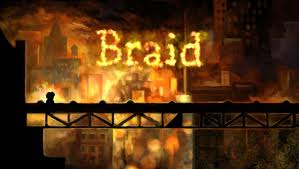
Metaphor through Video Games: Braid


Most people don’t consider video games to be art, much in the same way that television struggled to achieve that distinction, but as the industry becomes more accessible and diverse, and less wantonly commercial, we are beginning to see games emerge that challenge not only our hand-eye coordination, but the way we think about our own place in the world.
Ironically, some of the more simplistic-looking games are fulfilling this ideal.  Braid is a two-dimensional side-scroller, in the tradition of Super Mario Bros. and other early 8 and 16-bit games.  The sprite, or character, moves through the world from left to right in an attempt to solve puzzles and advance through a series of tasks.

Where Braid differs from the norm, and many of the more “advanced” three-dimensional games on the newest hardware, is the gameplay, and how that relates to story and metaphor.
As the title of this blog suggests, the best learning happens when the learner is activated, or for the purpose of the blog, on fire.  As an adult, I find myself becoming engaged by a question, looking into the potential answers, usually through the internet, and when I’m truly on fire, following a systemic pathway of links and articles.  I sometimes even lose track of time when activated in such a way. 
Art should always have this effect on us.  The first time I watched the film Donnie Darko, by Richard Kelly, I was intrigued.  I immediately played the movie a second time, this time with the director’s commentary, even though it was already midnight.  The next night I watched it again with the cast commentary.  I went to the web, and read theories and posited my own.  I made a list of works from the film that were referenced, and went out into the world to get my hands on them.  I read Watership Down again, purchased the book and film versions of The Last Temptation of Christ, picked through the short story “The Destructor’s” by Graham Greene, and learned about Einstein’s Theory of Relativity and how it relates to physical time travel.  All of this learning and consumption came about due to a movie about a guy in a creepy bunny suit. This is what good art does, activates us and invites us into the flow of ideas that the author lived in when they were creating; it enriches the art and opens us up to more of it.
Braid is comprised of a series of worlds, and within each world, time functions in a different way.  The function of Time in the game is tied to an overarching narrative that is richly developed at the start of each world.  After completing the game, I began to have questions about its meaning and development, and began to research.  I discovered that the game was based on 3 novels that the developer was intrigued by, The Cat That Walks Through Walls, by Robert A. Heinlein, Invisible Cities, by Italo Calvino, and Einstein’s Dreams, by Alan Lightman.  I went out immediately and devoured them. 

Einstein’s Dreams was an unbelievable find.  The basic crux of the novel is the idea that in order to understand how time functions in our universe, Einstein had to see the effect that changes to time would have on the human beings in those worlds.  He then looked at what we value in our societies, and determined how time works in our world based on those things.  It’s a stunning metaphor that shows the power of creative thinking in solving incredibly complex mathematical questions.
Braid’s first world is its best example of the effect that altering Time would have on our lives.  The text at the beginning of the level questions what would happen in a world where we could take back our mistakes.  How would it change the way we live our lives.  The gameplay mechanic in this world allows the player to rewind if they make a mistake.  As a learning tool, this allows for a great lesson to our students about risk taking and success, but it also provides teachers a valuable understanding.
Just because a student is capable of “doing something perfectly” right off of the bat, doesn’t necessitate they “know” anything, they may have simply gotten lucky, and this shows no strategic skill in problem solving per se.  Think of a maze.  A student runs through without making a wrong turn on the first try.  A second student resolves to take every right turn in order to create a system for success, that results in several dead-ends prior to getting through the maze.  Which experience was more valuable?  Which student demonstrated higher order thinking?  The obvious choice is the second student, but how often do our assessments and grades reward the first student with better marks?
Using Braid as a way to access this metaphor, and to begin implementing it into our instruction is, I believe, a valid and worthy exercise.  In what other ways can we create experience and metaphor as a way to help students privilege the journey as opposed to the end result?  As we move toward more 21st Century methods of teaching, the answer to this question should help to guide our instruction as well as our assessments. 


Tuesday, August 28, 2012

An Open Letter To Chris Christie


The debate surrounding Educational Reform in New Jersey is about to go national tonight at the RNC. Chris Christie will rollout his vision of the future, and most likely, set the stage for his own presidential run.


Photo courtesy of the Governor's Office/Tim Larsen


I have no desire to engage the Governor or other educational reformers, many of whom have no experience or contact with actual educators, in a debate about tenure, merit-pay, or pensions.  All of these things have been debated and screamed about, and retorted back and forth in various town hall meetings, and contested in the anonymously written comments that populate the online forums of our newspapers.  I have no desire to get into a screaming match with anyone, or be used as a campaign clip on a viral YouTube video.  I am simply concerned about the future of teacher quality in the state, and how any of the circus we have created around a group of issues that must be intellectually and effectively debated, might negatively impact recruitment, hiring, and developing new teachers.  In lieu of the Governor being chosen to give the Keynote Address at this year’s Republican National Convention, I’m very interested to hear his stance on the questions at the end of this letter.

The biggest concern I have about the culture we are creating, stems from two disparate notions of teachers.  One side will argue that teaching is a “calling,” a career that is magically ordained for prospective educators as their “life’s purpose.”  In the face of that idea, is the fact that almost half of new teachers leave the profession at or before their first 5 years of employment.  The other side of the argument believes that great teachers are simply those that follow a prescribed set of previously agreed upon lesson plans and drills, that if delivered correctly will create the resulting rise in test scores that define success.  Those that believe this method of teacher training and development very shortly reach the conclusion that as long as they are managed and extrinsically measured, that there will be quantifiable results.  There’s no reason to pay someone well for this type of job, unless they are one of the people writing the provided scripts.

By any rational measure, it’s clear that either picture is incomplete.  Great teachers can not simply “care” their way to success, without being skilled in delivering good instruction.  Likewise, following a paint-by-numbers approach to educating children, devoid of any strong desire to work with developing the future citizenry of the country, reduces teachers to robotic deliverers of basic facts and myopic views of a complex world.
I’ve been an educator for the past 10 years in this state. I have worked as a Classroom Teacher in a Special Education High School, and as an 8th Grade Language Arts Teacher.  Most recently, I became the Instructional Leader in our building, tasked with working with both new and established teachers to develop the new 21st Century Learning skills that will be vital to our children’s future success.
Sitting in these interviews, I’m struck by a few questions.  The first is personal.  When I was growing up, my father was (and still is) an Automotive and Technology Education Teacher in my high school.  My mother was a Special Education Teacher who was able to stay at home and raise me and my four siblings.  My father washed houses in the summer, and we were able to live in a Connecticut suburb of Hartford with relative fiscal safety.  I looked at the profession that my parents were engaged in and I saw it as a source of pride, it carried a sense that they were doing something “worthy,” despite the fact that we would never be rich, or be able to vacation at our own shore house.  I knew that I could do this job, provide for my family, and hopefully make a difference in the lives of young people.  As a Morris County homeowner and recent father of two, who works 3 additional jobs in order to pay the bills, and whose wife is also a teacher, I sometimes wonder, cynically, if I would have made that same decision upon entering college today.  Gov. Christie famously posited to teacher Rita Wilson, that if she was unhappy with her pay as a teacher, that she didn’t “have to do it.” He’s completely right about that, and people ARE making the decision to leave in large numbers, but what types of people WILL become teachers, and for the long haul,  if we continue this vitriolic debate that poisons the future pool of prospective “good” teachers?  How can we hope on one hand that our nation’s best and brightest students will become teachers, while at the same time expecting them to be martyrs?
I’m afraid that the current level of rhetoric, and the stigma that public education is being burdened with now, will have a devastating effect on the quantity and quality of people choosing to go into the profession over the next five to ten years.  
To Gov. Christie and the educational reformers on both sides of the aisle in New Jersey: What effect do you believe the nature of this debate is having on the students and professionals thinking about entering the field of education, and what are we doing to ensure that the BEST people are choosing to become educators in the schools and communities that need it most?  How do you plan to reverse the damage this debate is having on the way public education is being viewed, and how do you plan on attracting great educators to a state with a consistent history of strong academic success?  I believe that the the response to these questions will tell us infinitely more about the direction New Jersey Education is facing in the coming years, than any other attempt at reforming policy.

Respectfully,

Matthew Daly
Teacher

Monday, August 27, 2012

In the Face of Certain Destruction: An Exploration of Hope in Video Games


As you round the corner, you can begin to see the ashes descending from the sky.  You break into a run, avoiding the rubble falling from the exploding buildings that surround you; and even though this apocalyptic nightmare was a perfect and idyllic spring day not two minutes ago, your training tells you what is coming next.  The distant spaceship dominates the skyline.  Already, the pods have left the ship and are descending upon Central Park.  The invasion has begun, and thousands upon thousands of the alien legion will swarm the city streets by nightfall.  You face impossible odds, the only Space Marine to survive the off-world wars, and yet, a smile spreads across your face as you calculate the odds.
Somewhere in the ether, in another dimension even, the player that controls you shares your smile.
Promotional Still from Halo: Reach, copyright Bungie


***
The subject of gaming and its role in education is hotly contested on many levels.  At its basest, the argument most typically revolves around how and to what extent play represents “authentic” learning.  Rarely does the discussion broach the topic of Hope.
Hope in videogames is omnipresent.  The basic understanding when buying a game is that it can be beaten, mastered.  In fact, it has been designed to be completed, to create anything counter to this would doom the product to bargain bins.  With that knowledge, that the task is possible, failure becomes not a stigma, but a motivating challenge.  
The best games have mastered a subtle art.  They have balanced challenge with reward.  Earlier, when the local Arcade was the hub of electronic gaming, the harder the game was, the more popular the game became, as players attempted to reach and enshrine themselves as the “highscore” before eventually dying, allowing the next player in line to get a chance.  As gaming shifted away from the arcades and into suburban living rooms, the game design and intent changed.  When you look at how the use of “save” features, “infinite lives,” and “continues” have grown to pervade games, it’s easy to see that gamers are far more apt to take risks in this simulated environment.  Why?  Because they know that there is an answer, and that they will achieve mastery at some point, if they work hard.
A typical videogame is a relatively short experience when compared with the long weekly slog through childhood and adolescence that we call “school”.  We ask students to trust us that there is a greater goal waiting for them, but constantly restart them every new year with new rules and tasks.  Often, at the start of the year, the students are treated as blank slates.  Since the teacher is incapable of judging where each child is developmentally when they arrive cold, they start from the beginning to “guarantee” that they all get the same experience in the classroom.  This is misguided at best, and oppression at its worst.  By assuming that kids know nothing because there is no guarantee of what they know individually, educators rob students of the achievements they have accomplished in previous years, and they begin to see the process of school as a series of unconnected episodes, which are predicated upon satisfying an individual teacher, as opposed to developing a sense of their own mind.
Video games do the opposite of this.  They are tailor made for the ones playing.  Most games allow for “levelling up,” when the efforts put in by players results in a new power or skill that then becomes part of their persona.  Other games have collectible “achievements” or “badges” that the player displays on their personal viewable profile.  The game, and its subsequent sequels, never discounts the work done by players as they work towards the completion of the game.
I’m not sure that schools do this well enough.  In this metaphor, are grades the equivalent of “achievements” and “badges”?  By that rationale, do grade even represent what we are trying to engender in students, or are they simply a measure of compliance?
By the end of a school year, a students will have a variety of work-products from different classes across the subject areas that represent the “work” that they have done.  They know that almost NONE of it will be utilized ever again in subsequent years, and that come September, they will be starting over.  Is it possible that, after repeating this cycle year after year, students will begin to lose sight of why they are doing anything at all?  That there might not be an end?  That none of it is connected in any meaningful way?  If we were to overhear an adult expressing what I’ve just described as the way they view their life, we would call that person “depressed”.  And what is depression, if not a pervading feeling of Hopelessness.
In the Call of Duty series, a collection of heavily popular First-person shooting games that utilize a multiplayer match format, most players have “died” literally THOUSANDS of times.  In fact, the average player has a Kill/Death ratio that is in the negative, which means their character is killed more than they kill.  The series boasts 30 million players online across all iterations.  The second-newest game in the series, Call of Duty: Black Ops, has been played for over 600 million hours so far.  An outsider would look at the seemingly repetitive nature of the game and see no distinction between the tediousness of modern schooling and the hundreds of hours of gameplay an AVERAGE player puts into this virtual world.  They would miss the subtle nuances that make it far different.  Call of Duty uses a multi-tiered achievement system that is made up of levels.  Players accumulate EXP, or experience points, from kills and other in-game achievements.  Once they reach a new level, they are granted access to better or varied weapons, and “perks” (customizable enhancements that make the player better).  Upon reaching the highest level, players are offered the chance to “prestige,” which is a fancy term for starting over.  The caveat?  When they begin the process again, they will be viewed by others as a “2nd Prestige”,  or “3rd Prestige” and so on as they negotiate through.  The ability to move upward in the game is limitless, requiring an almost ridiculous amount of time, with very little physical reward, and yet, it is one of the most addictive experiences in youth culture today.  Why is this? What does it supply that differentiates it from schooling?  Simply, they know that success is possible, viewable and transferable.
As a teacher, I’ve been in situations where a student who clearly knows the answer is succumbing to some form of institutionalized apathy.  It became fashionable at some point, or maybe it was something I read, to further question the student in that scenario:  When a student says, “I don’t know,” teachers were to respond with “But what if you did?” or “Well, (Student’s Name), what would you say if you DID know?”  While I understand the conceit, I’m not sure if it is enough to truly change that willingness towards giving up and asking for the answer to be supplied.  “But what if..” is a question that transfers ownership to the student, but if it exists in a structure where there is no guarantee of success, and where the easiest route to success is to succumb to being told what to think, I’m not sure it is enough to change the trajectory the children are on.
Gamers, on the other hand, think about this all the time.  The difference is the situation in which they are engaged.  The presence of Hope is what drives this method of thinking.  When gamers are faced with a seemingly impossible task, such as an unscalable wall, or an undefeatable enemy, they ask themselves the following question, “In a perfect world, what would I need to solve this problem?”  Most often, the answers generated from this type of questioning will solve the player’s in-game issue.  The question can not exist outside the framework of a completable task, the understanding that no matter how difficult something seems, that there is a solution.  Gamers know that every task they are given is doable, eventually, if they work and think harder.  Isn’t that the type of student we are trying to create in our schools?  And if that is true, how do we better accomplish it?
As teachers, we are tasked with occasioning a classroom space that is best suited for learning.  The systems we create in our classrooms must be optimized for this end. Our classes contain boys and girls, Jocks and Nerds, The wealthy and the poor; but they also contain Starship Captains, Warlords, Farmers, Questing Knights, Puzzle Masters, Flying Dragons, Aspiring Detectives, and Cowboys avenging their past wrongs (things most of us as teachers have only read about).  At anytime during our day, we are teaching children that have saved planets, rescued damsels, and survived the Zombie Apocalypse; children that have faced absurd odds, and through their own wits and skill, smiled in the face of the seemingly impossible.  Every single one of them had an understanding, both tacit and explicit, that no matter how difficult the task, that it was attainable.  The way we provide Hope in our schools must change, if we desire to tap into the fierceness and voraciousness with which our students are capable of learning.